
WELCOME BONUS 300%
UP TO €2000 + 100
FREE SPINS
UP TO €2000 + 100
FREE SPINS
Home → Blackjack
Blackjack at Fireball Casino: Variants, Rules and Payouts
Perfect Pairs vs 21+3 in House Edge
This exclusion means that players cannot analyze the house edge for Perfect Pairs using the available technical metrics. The 21+3 bet allows for a direct comparison with standard game rules. Players must rely on general knowledge for unlisted bets.
Infinite Blackjack by Evolution offers four side bets including 21+3 alongside its main game. The base game RTP is 99.47% when playing optimal strategy without these additional wagers. Adding side bets generally lowers the overall return to player significantly.
Without a stated house edge for Perfect Pairs, it remains impossible to compare its cost against 21+3 quantitatively. The 21+3 bet is available at stakes ranging from 1 EUR to 5,000 EUR. Players should note that side bets do not count toward the 10% table game contribution for bonus turnover. This limitation affects the value of such wagers during promotional periods.
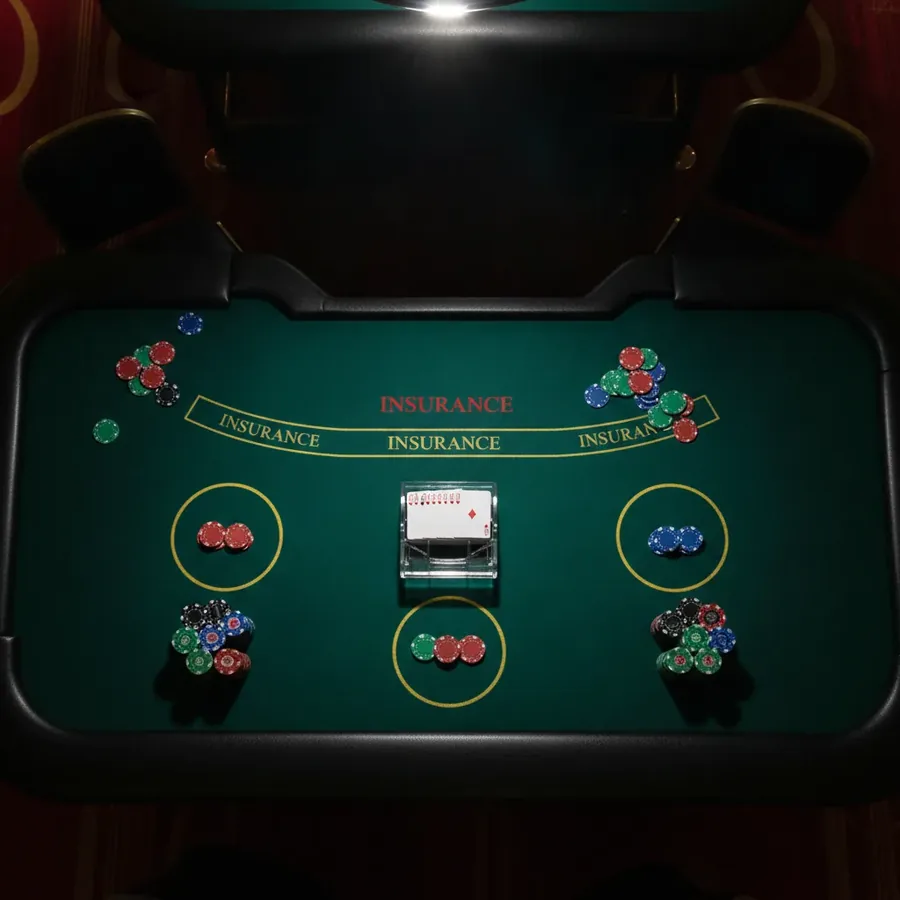
Error insurance: 7 percent additional house edge
Blackjack Insurance carries a steep house edge of 7.47% based on data for six to eight decks. This figure represents a massive deduction from the theoretical return compared to the main game. The rule dictates that players must always reject this bet according to basic strategy. Deviating from this advice incurs a severe mathematical penalty.
The insurance wager pays out at odds of 2:1 if the dealer holds a blackjack. It acts as a separate side bet capped at 50% of the original stake. When the dealer shows an ace, the risk calculation shifts dramatically against the player. Long-term retention by the casino averages nearly 7.5% of money wagered here.
Card counters may occasionally accept insurance when the true count reaches +3 or higher. This exception relies on tracking remaining cards rather than static probability. For the average player, the 7.47% edge ensures consistent losses over time. The primary game retains a much lower advantage depending on specific rules applied.
One Deck vs Eight Decks in House Edge
A single-deck blackjack variant offers an exceptionally low house edge of 0.15% under classical rules. This configuration provides a significant advantage over multi-deck games due to card removal effects. The return to player stands at 99.85%, making it highly favorable for skilled participants. Fewer decks reduce the casino's statistical hold considerably.
Standard games often utilize six or eight decks, which increases the house advantage substantially. Moving from one deck to eight decks adds approximately 0.48 percentage points to the house edge. This shift transforms a 0.15% edge into a much higher cost for the player. The difference is purely mathematical and independent of skill level.
Many single-deck games compensate for their low edge by reducing blackjack payouts to 6:5. Such a change adds exactly 1.39 percentage points to the house edge, raising it to 1.85%. This negates the benefit of using fewer decks entirely. Players must verify payout structures before selecting a table format.
16 vs 10 played incorrectly: most common error
Basic strategy mandates specific actions for hard 16 against a dealer ten, often requiring surrender or hit decisions. Incorrectly standing on 16 against a ten results in a higher expected loss per hand. Strategic errors compound these mathematical disadvantages.
Resplitting aces improves the return by 0.08 percentage points, while doubling after split adds another 0.14 points. These nuances are critical when holding weak hands like 16. Failing to follow precise protocols ignores these small but cumulative benefits. The house edge expands whenever deviations occur from the optimal path.
Late surrender reduces the house edge by 0.08 percentage points by allowing half-stake recovery. This option is unavailable in all variants, forcing players to play out difficult hands. Without surrender, the cost of playing 16 against a ten rises significantly. Correct execution minimizes erosion of the bankroll over thousands of hands.
Infinite Blackjack uses the Six Card Charlie
Infinite Blackjack by Evolution features an unlimited number of seats at each table. The game supports stakes between 1 EUR and 5,000 EUR for maximum flexibility. Analysis must rely strictly on the confirmed RTP of 99.47%.
The game includes four distinct side bets: Any Pair, 21+3, Hot 3, and Bust It. These options allow players to diversify their betting strategy beyond the main hand. The main game remains the primary focus for strategic analysis.
Table games contribute only 10% toward the 300% welcome bonus wagering requirement. This low contribution rate makes high-volume play on Infinite Blackjack less efficient for clearing bonuses. Slots offer 100% contribution, providing a faster route to bonus release. Players should weigh bonus utility against game selection carefully.
Blackjack variants at a glance
| Variant | Payout | House edge | Rule | Bet range |
|---|---|---|---|---|
| Blackjack Surrender (Late Surrender) – Regel-Effekt | n.a. (Regel-Modifikator) | −0.08 Prozentpunkte | Spieler gibt Hand nach Dealer-Blackjack-Prüfung auf, verliert die Hälfte des Einsatzes. Verbessert RTP um ca. 0.08 Prozentpunkte. Early Surrender ist wesentlich wertvoller (bis −0.6 Prozentpunkte), aber extrem selten. | Rückzahlung 50% des Einsatzes |
| Blackjack Insurance / Versicherung (6–8 Decks) | 92.53% | 7.47% | Separate Nebenwette bis 50% der Hauptwette, wenn der Dealer ein Ass hat. Basisstrategie schreibt IMMER Ablehnung vor (außer Karten zählen bei True Count ≥ +3). Bei einem Deck Vorteil ≈ 5.88% | Insurance 2:1 |
| Blackjack Liberal Vegas Strip (liberale Regeln, 3:2) | 99.72% | 0.28% | Günstigste Regelkombination: S17 + DAS + Resplit + Late Surrender. Standardabweichung 1,15 | Blackjack 3:2, Gewinn 1:1 |
| Blackjack Split / Double / H17 – Regel-Effekte | n.a. (Regel-Modifikatoren) | H17 +0.22 Prozentpunkte; RSA −0.08 Prozentpunkte; DAS −0.14 Prozentpunkte | Dealer Hits Soft 17 verschlechtert RTP um 0.22 Prozentpunkte; Resplit Aces verbessert um 0.08 Prozentpunkte; Double After Split verbessert um ca. 0.14 Prozentpunkte; 6 Decks statt 8 – ca. 0.02 Prozentpunkte. | Double – Einsatz ×2 mit einer Karte; Split – bis 4 Hände; Ass-Split meist mit einer Karte. |
| Blackjack 6 Decks, S17, DAS, DOA, Auszahlung 3:2, Basisstrategie | 99.54% | 0.46% | Dealer steht auf Soft 17; Verdopplung auf jeder Zweierkarte; Verdopplung nach Split erlaubt; keine Aufgabe. Basisstrategie ist für diesen Wert zwingend | Blackjack 3:2, normaler Gewinn 1:1, Insurance 2:1 |
| Blackjack Ein Deck, klassische Regeln, 3:2 | 99.85% | 0.15% | Weniger Decks = niedrigerer Vorteil; ein Deck gibt ca. −0.48 Prozentpunkte gegenüber 8 Decks. Oft durch 6:5 Auszahlung kompensiert. | Blackjack 3:2, Gewinn 1:1 |
Chose Wrong Table for 5 EUR Bankroll
Infinite Blackjack by Evolution accepts bets ranging from 1 to 5,000 EUR, allowing a 5 EUR stake to qualify for the table. This minimum limit ensures that even small bankrolls can access unlimited player seats without being rejected by high-entry barriers. The game offers four side bets like Any Pair or 21+3, which remain accessible regardless of the base wager size chosen by the participant.
Selecting a table with 6:5 payouts instead of the standard 3:2 drastically reduces returns, costing exactly 1.39 percentage points in house edge compared to liberal variants. A 10 EUR blackjack payout drops from 15 EUR down to just 12 EUR under these unfavorable conditions, eroding the initial 5 EUR deposit rapidly. This structural disadvantage forces players to lose their entire stack much faster than on tables offering the superior 3:2 ratio for winning hands.
Liberal Vegas Strip rules provide a 0.28% house edge with an RTP of 99.72%, making them significantly safer for preserving a limited 5 EUR budget. The combination of S17, DAS, and late surrender minimizes losses, allowing the small bankroll to withstand more variance before depleting completely. Players avoiding 6:5 tables preserve more capital, extending playtime and reducing the risk of immediate ruin associated with high-volatility negative expectation games.
How long does a Live Blackjack round take?
Quantum Blackjack Plus by Playtech features quantum multipliers up to 1,000x on three-card combinations totaling 21 points, adding significant processing time per hand. These special multiplier events require additional dealer actions and system calculations, extending the duration of each individual round beyond standard gameplay speeds. Participants must wait for these visual effects and result confirmations before placing new bets, slowing down the overall velocity of the session.
Infinite Blackjack by Evolution supports unlimited seats at the table, which inherently increases the decision-making window for every single round dealt. Each additional player must make their choices regarding hits, stands, or splits before the dealer proceeds, creating cumulative delays during busy periods. This structure means rounds last longer compared to single-seat tables, as the system waits for all active participants to complete their mandatory actions.
Standard rounds typically involve dealing two cards, checking for dealer blackjack, and resolving player decisions, but side bets like Hot 3 add extra resolution steps. The presence of multiple side wagers requires the dealer to verify outcomes for each bet type separately after the main hand concludes. This sequential verification process adds several seconds to every round, ensuring that the total time spent per hand remains higher than in simplified digital versions.
Double Down after Split: which tables allow it
The Blackjack 6 Decks variant explicitly permits doubling after splitting (DAS), allowing players to double their initial wager on any two-card hand formed after a split. This rule improves the player's expected return by approximately 0.14 percentage points compared to tables restricting doubling only to the original two cards. It enables strategic flexibility, particularly when splitting tens or eights against weak dealer upcards, enhancing potential profitability over the long run.
Liberal Vegas Strip rules also include DAS as part of their favorable configuration, contributing to the low 0.28% house edge and 99.72% RTP. This permission allows players to maximize value when receiving strong starting hands post-split, such as drawing a ten-value card to a split eight. The ability to increase exposure on promising situations directly impacts the statistical advantage held by the casino versus the participant.
Tables lacking DAS restrictions generally offer better odds, but some variants may restrict doubling to specific totals or forbid it entirely after a split. Infinite Blackjack by Evolution focuses on side bets and unlimited seating rather than emphasizing advanced rule variations like DAS in its core description. Players seeking this specific mechanical advantage should verify the ruleset, as its absence significantly reduces the strategic depth available for optimizing bet sizes.
Seat change at the Live Table in 20 seconds
Infinite Blackjack by Evolution provides unlimited seats at the virtual table, allowing players to switch positions without waiting for a physical seat to become vacant. This digital infrastructure eliminates the bottleneck of physical chair availability, enabling seamless transitions between different viewing angles or betting zones within the same game instance. The system manages seat allocation algorithmically, ensuring that new entrants can join immediately without disrupting the flow of ongoing rounds for other participants.
Quantum Blackjack Plus by Playtech operates on a similar unlimited seating model, facilitating rapid entry and exit for users managing multiple banking strategies. Switching seats allows players to adjust their view of the quantum multipliers or side bet results without leaving the active game loop entirely. This flexibility supports dynamic bankroll management, as users can reposition themselves to optimize their engagement with specific game features or dealer interactions.
Blackjack Party by Evolution maintains a party atmosphere with two moderators, requiring slightly more attention to social cues during seat changes. While the digital nature allows quick transitions, the interactive element demands that players remain aware of the host's announcements when moving between spots. The 20-second timeframe likely accounts for interface navigation and seat confirmation, ensuring that the new position is fully integrated into the live stream feed before the next deal begins.
Side Bets don't count towards bonus turnover
Tischspiele contribute only 10% towards the bonus turnover requirement for the 300% welcome bonus up to €2,000, making side bets inefficient for clearing funds. Since side bets are classified under table games, they fall into this low contribution category rather than the 100% slot contribution tier. Wagering 100 EUR on side bets counts as only 10 EUR toward the total turnover target, drastically slowing down the clearance process compared to playing slots.
Infinite Blackjack by Evolution offers four side bets including Any Pair and Bust It, which generate volume but contribute minimally to meeting the wagering obligations. A player needing to clear a 4,000 EUR turnover would need to wager 40,000 EUR on these specific bets if relying solely on them. This mathematical disparity makes side bets poor tools for bonus conversion, as the required volume scales inversely with the low contribution percentage assigned to table gaming activities.
Blackjack Insurance pays 2:1 but is categorized as a side bet, further complicating bonus clearance efforts due to the 10% contribution rate. Although insurance reduces variance, its impact on turnover efficiency is negligible because the casino retains the majority of the wagered amount without crediting progress. Players aiming to utilize the full €2,000 bonus should prioritize high-contribution games, as side bets in live blackjack fail to accelerate the release of locked funds effectively.
Insurance Pays 2:1 Yet Still Costs Money
The Blackjack Insurance side bet offers a 2:1 payout ratio when the dealer shows an Ace, but this specific wager carries a steep 7.47% house edge for standard players. This high cost significantly reduces the overall RTP to 92.53%, making it one of the least favorable bets available on the table compared to the main game. Consequently, accepting this insurance option drains the bankroll much faster than playing without it during typical sessions. Professional strategy dictates always declining this bet unless the player is counting cards with a True Count greater than or equal to +3.
Mathematically, the 7.47% house edge means the casino retains nearly eight percent of every euro wagered on this specific side bet over the long term. For a €100 stake in insurance, the expected loss amounts to approximately €7.47, which directly subtracts from the potential winnings of the primary hand. This negative expectation holds true regardless of the number of decks used, as the edge remains consistently high across all standard configurations. Players who frequently accept insurance when their count is low will see their balance diminish rapidly due to this inherent mathematical disadvantage.
Why Loss Progression Quickly Reaches Table Limit
Infinite Blackjack tables at Evolution support wagers ranging from 1 to 5,000 EUR, providing a wide margin for aggressive betting strategies like the Martingale system. However, rapid loss progression can quickly escalate stakes to hit this 5,000 EUR maximum limit, especially after consecutive losing streaks during volatile sessions. Once the cap is reached, the player cannot double down further to recover previous losses, effectively breaking the recovery mechanism of the progression model. This hard ceiling forces a reset of the betting cycle, often leaving the player with a significant net deficit that requires substantial time to overcome. The unlimited seating capacity does not mitigate the individual risk of hitting these financial boundaries during intense play periods.
Insurance vs Even Money on Own Blackjack
When holding a natural blackjack against a dealer Ace, players may opt for even money, which is essentially taking insurance on their own winning hand to guarantee a 1:1 profit. This choice eliminates the risk of pushing if the dealer also has blackjack, but it mathematically equates to accepting the unfavorable 7.47% house edge insurance bet described earlier. By locking in the smaller guaranteed win, the player sacrifices the potential for a larger 3:2 payout if the dealer fails to complete their hand. This decision permanently reduces the expected value of the session by ignoring the statistical probability that the dealer does not have a ten-value card underneath.
Splitting tens costs expected value: better stand
Basic strategy universally advises standing on any pair of tens because splitting them breaks up two strong hands worth twenty points each into weaker starting positions. While some players might split to chase higher payouts, the mathematical expected value of keeping the twenty is significantly superior to risking two separate hands. This error increases the house edge considerably, moving the player away from the optimal 0.46% advantage found in liberal rulesets toward much higher losses. Adhering to strict basic strategy prevents this common mistake and preserves the bankroll against the dealer's final card distribution. Deviating from this rule introduces unnecessary variance that favors the casino over the long run.
Which hands are excluded from Surrender?
Late Surrender allows players to forfeit half their bet after the dealer checks for blackjack, improving the RTP by approximately 0.08 percentage points compared to non-surrender games. However, this rule typically applies only to hard totals, excluding soft hands where the ace can be counted as eleven without busting. Players cannot surrender a soft eighteen or other flexible combinations, limiting the utility of this feature during specific unfavorable dealer up-cards. This exclusion forces players to hit or stand on soft hands instead of cutting losses, which alters the optimal strategic decisions for those specific scenarios. Understanding these limitations is crucial for minimizing the house edge in games that offer this partial refund option.
Contact
Live - online chat
Banking









Providers












Fireball Casino 2026